
Thomson Reuters Enterprise Centre GMBH and West Publishing Corp. V. Ross Intelligence
A landmark ruling from a U.S. District Court threatens to recalibrate the delicate balance between technological innovation and intellectual property rights in a manner that potentially redefines the contours of fair use in the era of artificial intelligence. The decision, handed down in Delaware, will have ripple effects through the tech industry, raising questions about the limits of intellectual property ownership when authors' works are harnessed to fuel generative AI systems.
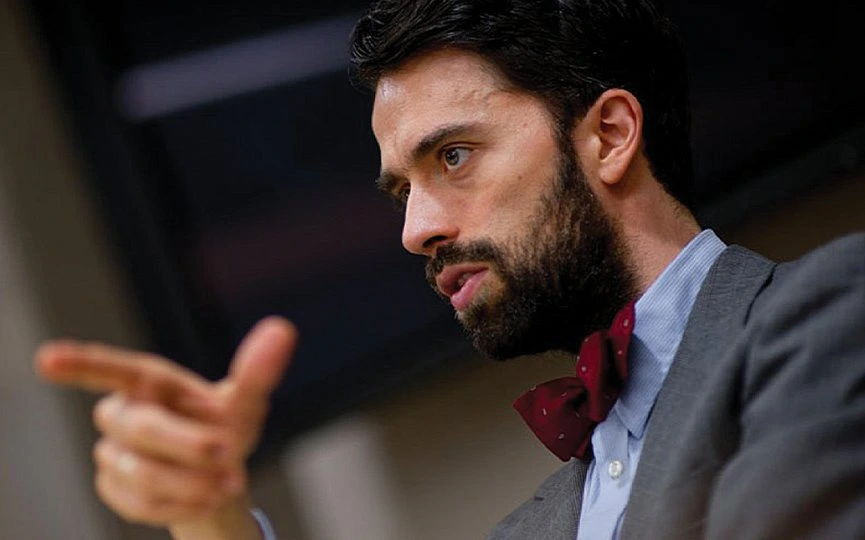
Judge Stephanos Bibas
Fundamentally, the ruling suggests that tech companies may have overstepped their bounds, exploiting the creative labor of authors without permission or proper compensation. The court’s judgment highlights the growing tension between the accelerated development of AI technologies and the painstakingly slow evolution of copyright law and exposes unresolved questions about the boundary between lawful innovation and copyright infringement in this AI dispensation.
In a vital decision, U.S. District Judge Stephano Bibas ruled that Ross Intelligence infringed on Thomson Reuters' copyright by leveraging WestLaw's bulk memos and headnotes to train its AI search tool.
Judge Bibas emphasized that Thomson Reuters' selection and arrangement of headnotes demonstrated sufficient creativity to warrant copyright protection, rejecting Ross Intelligence's claim of fair use. In delivering his dictum, the learned judge expressed that “ A block of raw marble, like a judicial opinion, is not copyrightable. Yet a sculptor creates a sculpture by choosing what to cut away and what to leave in place. That sculpture is copyrightable. So too, even a headnote taken verbatim from an opinion is a carefully chosen fraction of the whole. Identifying which words matter and chiseling away the surrounding mass, expresses the editor's idea about what the important point of law from the opinion is.” This ruling brings to the fore the paradox that lurks in the horizon of next-gen AI development: while copyright law acknowledges the originality of qualifying digital works, it also raises questions about the limits of fair use when AI systems recombine and transform copyrighted works.
As technology companies increasingly harness AI to build new tools, they must navigate the fine line between innovation and exploitation. The court's decision suggests that extracting authors' expressive elements without authorization may not constitute fair use if the utilization of the protected work is for commercial purposes; if the copyrighted work is of a nature that renders the defence of fair use inapplicable; how much of the work was used and how substantial a part it was relative to the copyrighted work's whole; and how Ross's use affected the copyrighted work's value or potential market. The first and fourth factors appeared to have weighed most heavily in the analysis, raising important questions about authorship and ownership in the age of AI. Judge Bibas’ opinion provides a crucial framework for authors, innovators, and tech companies to navigate this uncharted territory.
Judge Bibas' summary judgment emphasized that copyright protection requires only a "minimal spark of originality," with copyrightable works needing to be independently created, not novel. The court's ruling upholds intellectual property protections for authors, innovators, and tech companies, suggesting commercial AI use of copyrighted works may not be fair use.
Key Takeaways:
AI systems must meet minimal originality standards
Compilations require independent creation, not novelty
Complexity or effectiveness is irrelevant to copyright protection
Ross Intelligence infringed on Thomson Reuters' IP by replicating WestLaw's headnotes
This ruling, coupled with proposed laws and state regulations in key states that include California, Arkansas and Tennessee, indicates US courts are tightening copyright rules for AI, shaping the future of intellectual property and AI development.